10 Best Art Wooden Box Manufacturers for Global Buyers

Time:2026-09-07 Author:Aria
0%

The Art Wooden Box market is gaining attention as luxury brands seek tactile, reusable, and carefully crafted packaging. Buyers now expect more than attractive timber and polished hardware. They want stable construction, traceable materials, accurate branding, and dependable export service.

Smithers’ The Future of Global Packaging to 2028 reports that global packaging demand has already exceeded one trillion dollars. Its analysis also highlights sustainability, premium presentation, and material efficiency as important market forces. Grand View Research estimates that the global luxury packaging market will continue growing through 2030. These figures do not measure Art Wooden Box sales directly. However, they reveal the commercial environment surrounding premium wooden packaging.

Dr. Susan M. Selke, a respected packaging sustainability researcher and author, offers a useful reminder: “Packaging is a system, not simply a container.” That idea matters here. A box may look beautiful under showroom lighting, yet fail when humidity changes during ocean transport. Small details matter, including corner protection, hinge alignment, foam selection, and moisture-resistant finishing. Very much so.

This guide evaluates ten Art Wooden Box manufacturers for global buyers. It considers product quality, customization, material sourcing, production capability, packaging protection, and communication standards. FSC certification, when available, can support responsible sourcing, but certification alone does not prove every supplier is suitable. No ranking is perfect. Supplier performance can change, and buyers should verify samples, factory records, lead times, and recent references before placing an order. The strongest manufacturer is not always the cheapest. It is the one that consistently turns a design concept into a durable, refined, and commercially reliable box.
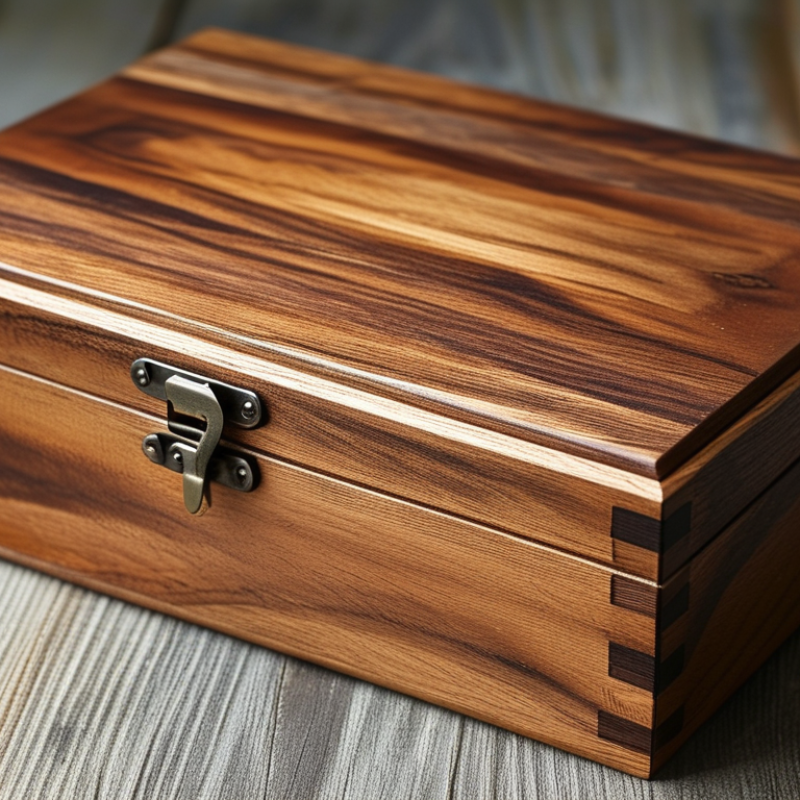
10 Best Art Wooden Box Manufacturers for Global Buyers

What Defines a Reliable Art Wooden Box Manufacturer

A reliable art wooden box manufacturer combines careful craftsmanship with repeatable production. The best suppliers understand that appearance is only one part of quality. They select stable wood, control moisture, and inspect grain direction before cutting. This reduces warping when boxes travel between different climates. Strong finger joints, clean hinges, and even edges also reveal serious workshop experience.

Details matter greatly. Ask for a physical sample before approving a large order. Check whether the lid closes smoothly and protects artwork without excessive pressure. A dependable manufacturer should explain wood grades, finish options, inner padding, and protective packaging in clear language. They should also provide inspection records, production timelines, and realistic capacity information. Fast promises are not proof.

Look closely.

Reliable factories welcome questions about tolerances and quality control. They can identify where defects usually occur, such as corner gaps, uneven varnish, or weak hardware. Traceable materials and responsible sourcing further support professional purchasing decisions. Still, no manufacturer is flawless. A perfect sample may hide inconsistent batch production. Buyers should request random inspections, not only polished showroom pieces. Communication can fail, too, especially when measurements change late. Written drawings and approval checkpoints help prevent expensive misunderstandings. The strongest partnership leaves room for honest correction, rather than pretending every process is perfect.

How to Evaluate Materials, Craftsmanship, and Customization

Choosing among the 10 best art wooden box manufacturers requires more than attractive photographs. Examine the timber, joinery, interior lining, and finishing process. Hardwood should feel dense, dry, and stable, with no sharp odor or visible warping. Ask for moisture-control records and sample photographs taken in natural light. Dovetail or reinforced rabbet joints usually suggest stronger construction than simple glued corners. I still find that polished samples can hide weak hinges, so inspect the underside and inner edges.

Material history also matters. The FAO Global Forest Resources Assessment 2020 records about 4.06 billion hectares of forest worldwide. Responsible manufacturers should explain wood species, origin, and chain-of-custody documentation. This supports credible purchasing decisions and reduces uncertainty. For finishes, request test results for abrasion, color stability, and surface adhesion. The packaging sector is also moving toward circular design. Smithers’ Future of Sustainable Packaging to 2028 highlights traceability and material efficiency as continuing priorities.

Tips: Request one production sample. Measure twice. Test the hinge repeatedly. Compare the empty box with a loaded box, because weight can expose weak hardware. For customization, confirm artwork tolerances, engraving depth, foam density, and minimum order quantities in writing. A useful supplier should provide a clear drawing before production. My own evaluation mistake was focusing too heavily on carving detail; the box looked impressive but opened unevenly. Craftsmanship needs both beauty and reliable daily movement.

10 Best Art Wooden Box Manufacturers for Global Buyers - How to Evaluate Materials, Craftsmanship, and Customization
Profile Primary Wood or Panel Material Evaluation Craftsmanship Indicators Surface Finish Options Customization Capability Typical MOQ Range Typical Lead Time Best Use Case Buyer Verification Priority
Profile 01 Solid walnut Dense hardwood with distinctive grain; kiln-drying and moisture control should be confirmed. Hand-selected boards, tight mitre joints, concealed hinges, and consistent corner alignment. Natural oilMatte lacquer High: engraving, fitted interiors, custom dimensions, and presentation inserts. 50–200 units 35–60 days Premium art gifts and collector presentation boxes. Wood moisture report
Profile 02 Solid beech Fine, uniform grain and good machining stability; suitable for painted or natural finishes. Clean CNC routing, dowel or finger joints, flush lids, and smooth edge rounding. Water-based paintClear lacquer High: color matching, logo engraving, trays, dividers, and magnetic closures. 100–500 units 30–50 days Mid-to-premium retail packaging and art sets. Paint adhesion test
Profile 03 Birch plywood with hardwood veneer Cross-laminated structure offers dimensional stability; veneer thickness and core quality require checking. Accurate panel cutting, low-void construction, durable edge banding, and even veneer matching. Clear coatStainPrinted finish Very high: large-format graphics, compartments, foam inserts, and structural modifications. 200–1,000 units 25–45 days Scalable art kits, gallery merchandise, and export packaging. Panel grade and formaldehyde documentation
Profile 04 FSC-certified solid rubberwood Consistent plantation hardwood; legality, chain-of-custody, kiln-drying, and treatment records should be verified. Stable finger joints, accurate lid fitting, rounded edges, and repeatable batch quality. Water-based lacquerWax Medium to high: engraving, printed graphics, removable trays, and standard hardware changes. 300–1,500 units 35–55 days Eco-positioned gift boxes and volume retail programs. FSC certificate validity
Profile 05 Bamboo laminated board Renewable material with a distinctive linear appearance; lamination quality and adhesive safety are important. Uniform panel bonding, clean CNC cuts, stable hinges, and controlled surface sanding. Natural oilMatte varnish High: laser engraving, custom partitions, sliding lids, and lightweight structural designs. 200–1,000 units 30–50 days Sustainable art stationery and contemporary gift packaging. Adhesive and warp-resistance test
Profile 06 MDF with wood veneer Uniform substrate suitable for precise machining; moisture resistance and edge sealing must be assessed. Sharp routed details, seamless veneer application, concealed fasteners, and consistent panel thickness. High-gloss lacquerPU coatingPrinted laminate Very high: complex graphics, layered interiors, foam, fabric, and custom mechanisms. 500–3,000 units 25–45 days Branded art collections and cost-controlled premium packaging. Moisture resistance and emissions test
Profile 07 Solid oak Hard, durable timber with visible grain; expansion, contraction, and board selection require careful control. Traditional joinery, reinforced hinges, uniform grain direction, and precise lid clearance. Hardwax oilNatural lacquer Medium to high: bespoke sizes, engraved panels, brass fittings, and archival interiors. 50–300 units 40–70 days Heavy-duty artist portfolios and long-life collector boxes. Seasonal movement control
Profile 08 Paint-grade poplar or pine Lightweight and economical softwood; knots, resin, density variation, and surface preparation need inspection. Stable frame construction, filled knots, smooth primer application, and even painted coverage. Primer and paintDistressed finish High: decorative profiles, color matching, vintage effects, and basic interior fittings. 100–800 units 30–55 days Decorative art boxes, craft collections, and event merchandise. Knot treatment and coating durability
Profile 09 Veneered plywood with archival lining Stable engineered panel combined with acid-free paper, felt, or fabric interiors for sensitive contents. Dust-controlled assembly, smooth interior seams, secure closures, and accurate insert tolerances. Low-VOC lacquerWater-based stain Very high: museum-style inserts, EPE or EVA foam, certificates, and fitted supports. 50–500 units 40–75 days Fine art editions, archival objects, and limited-edition collectibles. Acid-free and low-VOC documentation
Profile 10 Mixed hardwood construction Combines cost-efficient structural wood with premium visible panels; species compatibility must be controlled. Consistent assembly jigs, reinforced stress points, replaceable hardware, and documented inspections. StainLacquerWax High: mixed materials, metal plates, leather handles, custom trays, and export-ready packaging. 100–1,000 units 35–60 days Flexible international programs requiring balanced cost and appearance. Material compatibility and pre-shipment inspection
Industry reference ranges are indicative rather than manufacturer-specific quotations. Actual MOQ, lead time, certifications, wood species, finish performance, and customization scope should be confirmed through samples, technical specifications, and pre-shipment inspection.

10 Leading Art Wooden Box Manufacturers for Global Buyers

Choosing among the 10 leading art wooden box manufacturers for global buyers requires more than comparing photographs. Experienced buyers inspect timber quality, joinery, finishing, and export documentation. A well-made box should open smoothly, protect delicate surfaces, and remain stable during changing humidity.

The strongest manufacturers usually offer kiln-dried hardwood, reinforced corners, acid-free lining, and custom foam supports. Some produce museum-style presentation boxes with concealed hinges and hand-applied finishes. Others specialize in compact gift packaging, exhibition cases, or large wooden crates for framed artwork. Ask for material samples before placing a large order. A sample reveals uneven varnish, loose joints, or sharp interior edges quickly.

I have found that reliable workshops explain production limits clearly. They provide drawings, tolerance details, packing photos, and realistic lead times. They also confirm whether wood treatment, labeling, and shipping documents meet destination requirements. That matters for buyers in different regions.

No supplier is perfect. One manufacturer may offer beautiful carving but lack flexible packaging. Another may deliver precise sizing but use a limited range of finishes. Buyers should record these trade-offs instead of trusting polished sales language.

Quality control should include hinge testing, surface inspection, moisture checks, and carton-drop testing. Secure communication helps, too. A responsive production team can correct a 2-millimeter size error before it affects an entire shipment. That small detail often separates a dependable manufacturer from an attractive but risky choice.

Comparing Production Capacity, Quality Standards, and Pricing

When comparing ten art wooden box manufacturers, production capacity should mean more than a large factory. Buyers should review monthly output, staffing, machinery, and current order schedules. A workshop producing 20,000 boxes monthly may struggle with a sudden 10,000-piece order. Ask for production records, sample lead times, and realistic delivery windows. Capacity claims can be optimistic.

Quality standards deserve close inspection. Experienced buyers should check wood moisture, panel thickness, corner joints, sanding quality, and coating consistency. A reliable manufacturer can provide inspection reports, material records, and pre-shipment photographs. Small details matter. A loose hinge can damage the box during repeated use. Packaging tests also matter because long-distance shipping exposes weak corners and poor cushioning. Samples help, but they do not guarantee every bulk shipment.

Pricing requires a complete comparison. Request itemized quotes for materials, labor, engraving, hardware, packaging, tooling, and shipping terms. A lower unit price may hide thinner wood or weaker fittings. Higher pricing can reflect better finishing equipment, stricter inspections, or lower defect rates. However, expensive does not always mean superior. Compare identical specifications and request a written quality tolerance. I have seen buyers compare a hand-finished sample with a simplified production version. That mistake changes the calculation. Leave room for sampling, revisions, and unexpected delays.

How to Choose the Best Manufacturer for Your Art Packaging Needs

Choosing the right art wooden box manufacturer begins with understanding your packaging needs. A watercolor set may need shallow compartments, while a framed artwork requires deeper protection. Measure the product, padding, and display space before requesting quotations. Experienced manufacturers should explain wood options, moisture control, joinery, and surface finishes clearly. Ask for physical samples. Photos can hide uneven corners, weak hinges, or rough sanding.

Tips: Compare more than price. Request a production sample, material details, and a written quality checklist. Confirm minimum order quantities, lead times, packaging methods, and inspection procedures. Check whether the manufacturer can provide consistent color, precise dimensions, and replacement support. Small details matter. A loose latch can damage the box during transport.

Reliability appears in communication and repeatable production. Ask how wood is dried, how coatings are tested, and how defects are recorded. Clear answers are more useful than impressive promises. I once underestimated the importance of interior clearance; a few extra millimeters could have prevented crushed corners. That mistake is worth remembering. Global buyers should also review shipping documents, safety expectations, and applicable packaging requirements for their destination. A responsible manufacturer welcomes practical questions and admits limitations instead of promising perfection.

10 Best Art Wooden Box Manufacturers for Global Buyers

Material density benchmark for selecting protective, lightweight, and export-ready art packaging.

Representative air-dry density values are shown in kilograms per cubic meter. Lower-density woods can reduce shipping weight, while higher-density woods generally provide greater rigidity and impact resistance. Actual values vary by species, moisture content, and processing quality, so buyers should confirm material specifications with each manufacturer.

FAQS

: What makes an art wooden box manufacturer reliable?

: A reliable manufacturer combines skilled craftsmanship with consistent production. They control wood moisture and inspect grain direction before cutting. Strong joints, clean hinges, and even edges matter. Fast promises are not proof.

Which wood qualities should buyers check?

Choose wood that feels dense, dry, and stable. Avoid visible warping, sharp odors, or rough surfaces. Ask for the wood species, origin, and moisture-control records. Stable timber reduces movement across changing climates.

Why should buyers request a physical sample?

A physical sample reveals problems photographs may hide. Check the lid, hinges, corners, lining, and inner edges. Load the box with realistic weight. A beautiful sample can still open unevenly.

Which construction details indicate stronger craftsmanship?

Reinforced joints usually perform better than simple glued corners. Inspect finger joints, dovetails, or reinforced rabbets. The lid should close without excessive pressure. Test the hinge repeatedly. Small gaps matter.

How can buyers evaluate interior protection?

Confirm the foam density, lining material, and artwork clearance. The interior should hold the artwork without pressing delicate surfaces. Acid-free lining may suit sensitive artwork. Ask for a drawing showing all internal measurements.

What customization details should be confirmed in writing?

Confirm dimensions, artwork tolerances, engraving depth, foam density, and finish options. Request an approval drawing before production begins. Record every measurement change. A two-millimeter error can affect an entire shipment.

What quality-control checks should a manufacturer provide?

Useful checks include moisture testing, hinge testing, surface inspection, and carton-drop testing. Ask for inspection records and random production samples. Do not inspect only polished showroom pieces. That approach can miss batch inconsistencies.

How can buyers judge packaging and shipping readiness?

Request packing photographs and details about protective materials. The box should resist movement, impact, and changing humidity during transport. Confirm treatment, labeling, and shipping documents for the destination. Packaging is not an afterthought.

What communication habits reduce production mistakes?

Use written drawings, tolerance details, deadlines, and approval checkpoints. Ask the supplier to explain production limits clearly. Record corrections instead of relying on informal messages. Communication sometimes fails. Plan for it.

Can any manufacturer be considered perfect?

No manufacturer is flawless. One may offer excellent carving but limited packaging options. Another may provide precise sizing but fewer finishes. I once focused too much on carving detail and overlooked uneven opening. Beauty needs reliable daily movement.

Conclusion

Choosing a reliable Art Wooden Box manufacturer requires more than comparing prices. Global buyers should assess the quality and sustainability of the wood, the precision of construction, surface finishing, protective features, and the manufacturer’s ability to provide accurate customization. Strong suppliers typically offer clear specifications, consistent samples, dependable communication, quality inspections, and production processes that support both small orders and large-volume requirements.

This guide introduces ten leading types of manufacturers for global purchasing decisions and explains how to compare their production capacity, quality standards, lead times, customization options, and pricing structures. It also highlights practical questions buyers should ask before placing an order, including material certifications, packaging protection, replacement policies, and shipping coordination. By balancing craftsmanship, durability, design flexibility, service reliability, and total cost, buyers can select the best Art Wooden Box partner for protecting and presenting valuable artwork.


Aria

Aria

Aria is a dedicated marketing professional with a deep passion for innovative strategies and a keen understanding of our company's product offerings. With a wealth of experience in the industry, Aria excels at crafting engaging content that highlights the unique features and benefits of our......