Choosing the best 5x5 Glass Sheet for 2026 is not as simple as selecting the clearest panel. The right option depends on its purpose, thickness, edge treatment, and expected exposure. A small square may serve as a craft insert, cabinet panel, display cover, laboratory sample, or decorative tile. Each application creates different performance demands.
This guide compares common choices, including annealed, tempered, laminated, low-iron, and textured glass. It examines light transmission, surface clarity, heat tolerance, impact behavior, cleanability, and installation requirements. A workshop inspection often reveals details that product photos hide. Tiny edge chips, slight waviness, protective-film residue, or uneven thickness can affect the final result. Measurement matters too. A “5x5” panel may require exact dimensions, or it may refer to a nominal size with manufacturing tolerance.
No single glass type wins every test. Tempered glass offers stronger safety performance, but it cannot be cut after treatment. Laminated glass holds together after cracking, yet its interlayer can add weight and reduce visual neutrality. Low-iron glass looks exceptionally clear, although fingerprints and edge imperfections become easier to notice. Textured glass improves privacy, but it may reduce the crisp appearance of displayed objects.
The most reliable decision combines manufacturer specifications, verified dimensions, and real-use testing. Check thickness, corners, packaging quality, and compatibility with adhesives or frames. A cheaper sheet can become expensive after breakage or replacement. Still, specifications do not answer everything. Handling conditions, installation skill, and maintenance habits can change the outcome. This comparison aims to make those trade-offs visible before purchasing a 5x5 Glass Sheet in 2026.
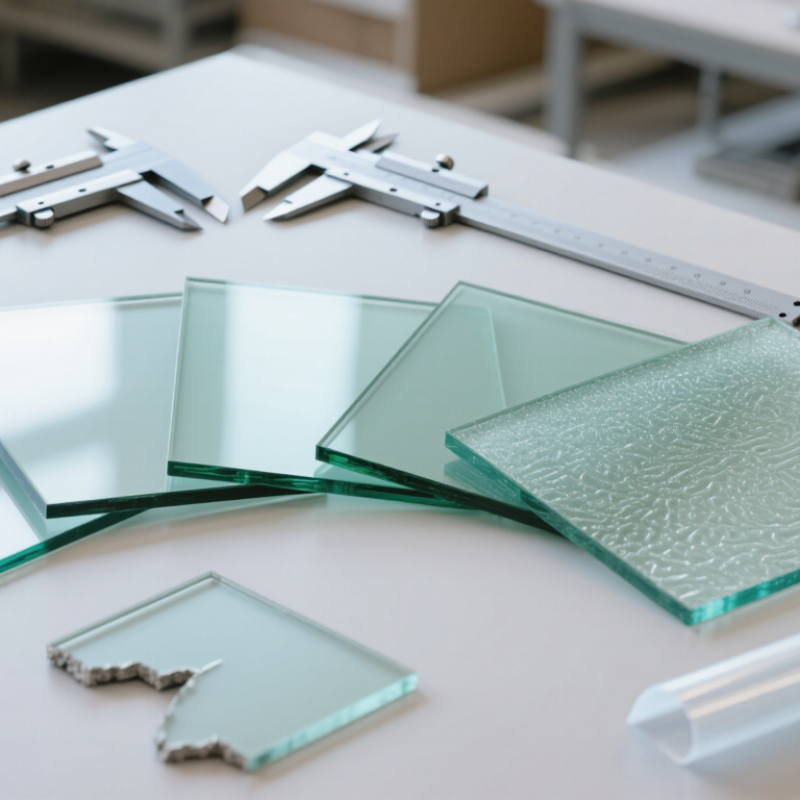
What Is the Best 5x5 Glass Sheet Type for 2026?
A 5x5 glass sheet usually measures five inches by five inches, or about 127 by 127 millimeters. The term describes size, not glass composition. Actual dimensions may vary slightly after cutting, so precise projects need measurement confirmation.
Small glass sheets appear in picture frames, cabinet inserts, craft projects, display cases, and sample panels. They also help designers test color, transparency, texture, and light transmission before ordering larger pieces. In workshops, a square sheet can protect a tabletop or cover a small opening. It is compact and easy to handle.
Different uses require different glass types. Clear float glass suits basic decorative work and indoor framing. Tempered glass offers improved impact resistance and safer breakage, but it cannot be cut after heat treatment. Laminated glass holds broken pieces together through an internal layer. Low-iron glass provides a cleaner view when color accuracy matters.
A practical mistake is choosing by appearance alone. I once overlooked edge exposure during planning. That detail affected the safer option. Ask whether the sheet will face heat, impact, moisture, or frequent handling. Edges should be smooth, especially for craft and display applications. Thickness also matters; a thin sheet may flex, while a thicker one can add unnecessary weight. For 2026 projects, the best 5x5 glass sheet remains the type matched to its setting, mounting method, and safety needs.
For a 5x5-inch glass sheet, the best type depends on the application, not the size alone. In 2026, safety, optical clarity, durability, and energy performance matter most. Tempered glass suits displays, equipment covers, and areas exposed to impact. It is stronger than ordinary annealed glass, but it cannot be cut after treatment. Laminated glass offers better protection because its inner layer holds fragments together after breakage. It also reduces sound and filters much ultraviolet radiation.
Low-iron glass provides clearer color and less green tint around white backgrounds. This property is valuable for sensors, lighting panels, product samples, and precision viewing windows. For outdoor or high-heat use, check thermal expansion, surface coating stability, and edge quality. A poor edge can create stress points. Thickness should match the load, mounting method, and vibration level. I have seen small sheets fail because designers judged strength by dimensions alone. That assumption needs review.
Tips: Define the use before choosing the glass. Test glare under real lighting. Request measured transmission data, not general claims. For frequent cleaning, consider scratch resistance and chemical compatibility. Anti-reflective coatings can improve readability, but they may show fingerprints more clearly. Confirm tolerances, flatness, and corner finishing before production. These details seem minor. They are not. A prototype should face heat, impact, moisture, and repeated handling, although one test rarely represents every field condition.
What Is the Best 5x5 Glass Sheet Type for 2026?
For a 5x5 glass sheet, the best type depends on its location, load, and visual purpose. Float glass is the economical baseline. It offers a clean surface for cabinet doors, picture frames, and protected indoor panels. However, it breaks into sharp shards and suits low-risk applications only. Confirm the exact measurement first. “5x5” may mean inches or feet.
Tempered glass is stronger against heat and impact than standard float glass. When it breaks, it crumbles into smaller pieces. This makes it useful for doors, partitions, tabletops, and shower panels. It cannot be cut or drilled after tempering, so every hole and edge detail must be planned early. I have seen otherwise good installations fail because hinge positions were measured twice, but not checked against the final hardware.
Laminated glass contains a clear interlayer between two sheets. It usually stays together after cracking, making it a practical choice near people, overhead areas, and exposed openings. Low-iron glass provides a noticeably clearer view, especially beside white paint or pale stone. It costs more, and its visual benefit can be wasted when the frame is dark or the glass is heavily tinted. For many 2026 projects, laminated low-iron glass offers the strongest balance of safety and clarity, while tempered glass remains the simpler choice for routine interior work. Use a qualified fabricator to verify thickness, edge finish, and local safety requirements.
Typical visible light transmission for clear, approximately 6 mm glass configurations
Low-iron glass generally provides the highest visible clarity, while standard float and tempered glass usually transmit similar amounts of light because tempering changes the strength rather than the basic optical composition. Laminated glass can transmit slightly less light because of its interlayer. For a small 5 × 5 inch sheet, choose float glass for general economical use, tempered glass for improved thermal and impact safety, laminated glass for retention after breakage, and low-iron glass when maximum clarity is the priority. Actual transmission varies with thickness, tint, coatings, interlayer type, and surface condition.
Values shown are representative ranges compiled from commonly specified clear architectural glass properties; they are not manufacturer or brand ratings.
A 5x5 glass sheet is small, but its specification is not. For shower niches, cabinet inserts, or splashback samples, tempered glass suits areas exposed to heat and impact. It is stronger than ordinary annealed glass and breaks into smaller pieces. However, it cannot be cut after tempering. Measure every edge twice. A small error becomes obvious around grout lines.
Choose laminated glass when fall protection, sound control, or fragment retention matters. It holds together after cracking, although its interlayer edges need protection from moisture. Low-iron glass fits display work and pale tile, where ordinary glass may look slightly green. Frosted or patterned sheets improve privacy and hide fingerprints, but they reduce light transmission. The International Energy Agency’s Buildings 2023 report states that buildings consume about 30% of global final energy. For exterior applications, insulated low-emissivity glazing may therefore serve better than a single decorative sheet, even at this compact size. A 5x5 panel alone will not transform energy performance.
Project conditions should decide the type, not appearance alone. Check thickness, edge finish, thermal exposure, mounting method, and the applicable safety standard before ordering. Industry testing under standards such as ANSI Z97.1 and CPSC 16 CFR 1201 can help verify safety glazing performance. I have seen attractive samples fail because the frame allowed water into the edges. That detail is easy to overlook. 马会
Which 5x5 Glass Sheet Type Best Fits Different Project Requirements?
| Glass Sheet Type | Typical Thickness Options | Safety Performance | Light Transmission | Thermal / Energy Performance | Acoustic Performance | Typical Weight for 5x5 Sheet* | Best Project Fit | Main Limitations | Overall Suitability |
|---|---|---|---|---|---|---|---|---|---|
| Annealed Clear Glass | 1/8 in, 3/16 in, 1/4 in, 3/8 in, 1/2 in | Breaks into sharp shards; not safety glazing where impact protection is required. | Approximately 88%–91% for common clear thicknesses. | Basic single-glazing performance; typical center-of-glass U-value is about 1.0 W/m²·K. | Low to moderate; thicker glass improves sound reduction slightly. | About 63 lb at 1/8 in; 125 lb at 1/4 in; 188 lb at 3/8 in; 250 lb at 1/2 in. | Low-cost interior partitions, picture frames, non-impact applications, and protected cabinet panels. | Limited safety performance; can crack from thermal stress and impact. | ★★★☆☆ |
| Tempered Safety Glass | 1/8 in to 1/2 in; 1/4 in is common for doors and partitions. | Heat-treated for increased strength; breaks into smaller, less sharp particles. Required in many hazardous locations. | Approximately 88%–91% when made from clear base glass. | Similar insulation to annealed glass of the same thickness; solar-control coatings can improve performance. | Low to moderate; thermal treatment does not provide major acoustic improvement. | About 125 lb at 1/4 in; 188 lb at 3/8 in; 250 lb at 1/2 in. | Shower enclosures, glass doors, railings, storefronts, partitions, and high-traffic interior areas. | Cannot be cut, drilled, or edge-worked after tempering; spontaneous breakage is possible but uncommon. | ★★★★★ |
| Laminated Safety Glass | Common configurations include 1/4 in, 5/16 in, 3/8 in, and 1/2 in. | Two or more glass layers bonded with an interlayer; remains partially held together after breakage. | Approximately 85%–90%, depending on glass layers and interlayer type. | Basic thermal performance unless combined with a low-emissivity coating or insulating air space. | Moderate to high; the interlayer helps reduce selected traffic, construction, and impact noise. | About 125 lb at 1/4 in; approximately 145–165 lb for many 5/16 in configurations. | Overhead glazing, guardrails, skylights, hurricane-prone areas, security glazing, and noise-sensitive spaces. | Heavier and usually more expensive than monolithic glass; edge protection is important against moisture. | ★★★★★ |
| Low-Iron Clear Glass | 1/8 in to 1/2 in; 1/4 in is common for display and architectural work. | Safety depends on whether the sheet is annealed, tempered, or laminated. | Approximately 91%–93%; offers reduced green tint and improved color clarity. | Similar to clear glass unless paired with a solar-control or low-emissivity coating. | Low to moderate; clarity improvement does not significantly increase sound reduction. | About 125 lb at 1/4 in; 188 lb at 3/8 in; 250 lb at 1/2 in. | Retail displays, museums, premium interiors, art protection, daylight-focused façades, and color-critical applications. | Higher cost; improved optical clarity alone does not provide impact safety or insulation. | ★★★★☆ |
| Frosted or Acid-Etched Glass | Typically 1/8 in to 1/2 in; commonly supplied as tempered or laminated glass. | Safety depends on the underlying glass construction; tempered or laminated versions are preferred for human-contact areas. | Usually approximately 70%–85%, depending on the pattern and surface treatment. | Comparable to the base glass; surface treatment does not materially improve insulation. | Low to moderate; privacy effect is visual rather than acoustic. | Depends on the base glass; about 125 lb for a 1/4 in sheet. | Bathroom partitions, office privacy screens, interior doors, decorative panels, and diffused-light features. | Can show fingerprints, scratches, and cleaning marks; permanent etching may be difficult to repair. | ★★★★☆ |
| Insulating Glass Unit | Common overall thicknesses range from about 3/4 in to 1-1/4 in, depending on glass and spacer selection. | Often made with tempered or laminated panes; safety rating depends on the individual panes. | Approximately 70%–80% with standard low-emissivity coatings; varies by coating and pane arrangement. | Strongest option for thermal efficiency; typical center-of-glass U-value can be about 0.25–0.35 Btu/h·ft²·°F with low-emissivity coating and inert-gas fill. | Moderate; laminated panes and different pane thicknesses can improve sound control. | About 250–375 lb for a 5x5 unit, depending on total glass thickness and construction. | Exterior windows, façades, sunrooms, energy-efficient renovations, and conditioned spaces. | Thicker, heavier, and more expensive; requires a compatible frame and careful edge sealing. | ★★★★★ |
| Patterned or Textured Glass | Commonly 1/8 in to 1/4 in; safety versions are available in selected patterns. | Annealed patterned glass is not automatically safety glass; choose tempered or laminated construction when required. | Approximately 60%–85%, depending on pattern depth and opacity. | Basic single-glazing performance; similar to glass of the same thickness. | Low to moderate; texture provides privacy but limited noise reduction. | About 63 lb at 1/8 in and 125 lb at 1/4 in. | Decorative doors, cabinet inserts, privacy windows, feature walls, and interior design projects. | Cleaning can be more difficult; visual distortion may not suit display or precision-viewing applications. | ★★★☆☆ |
| Fire-Resistant Glass | Project-specific multi-layer constructions; thickness varies by certified assembly. | Designed to meet tested fire-resistance or fire-protection requirements when used in an approved frame and system. | Often approximately 70%–85%, depending on the construction. | Selected primarily for fire performance rather than maximum thermal efficiency. | Moderate; performance varies significantly by the tested assembly. | Often 250 lb or more for a 5x5 sheet, depending on system thickness. | Fire-rated doors, corridors, stairwells, commercial partitions, and code-controlled openings. | High cost and weight; must be specified as a tested glazing-and-frame assembly. | ★★★★☆ |
*A 5x5 sheet is approximately 60 x 60 inches, or 25 square feet. Weight estimates use roughly 2.5 lb per square foot for each 1/8 inch of solid glass and are approximate. Actual values vary with thickness, coatings, interlayers, spacers, edgework, and certification requirements. Always verify local building codes, wind-load calculations, safety-glazing rules, and the manufacturer’s tested specifications before ordering.
What Is the Best 5x5 Glass Sheet Type for 2026?
Before selecting a 5x5 glass sheet, define its actual job. A display panel, cabinet door, craft project, and outdoor cover need different glass properties. Measure the opening twice. A small size error can create stress during installation.
Check the thickness, edge finish, and tolerance listed by the supplier. A square sheet with rough edges may look acceptable but can chip during handling. Tempered glass suits areas needing better impact and heat resistance. Laminated glass helps hold fragments together after breakage. Annealed glass may work for low-risk indoor projects, but it needs careful placement.
Look closely at clarity. Hold the sheet against a plain white wall and inspect it under angled light. Watch for scratches, bubbles, haze, and uneven color. Ask for test information, production date, and traceable quality records. Reliable sellers should explain how the glass was tested, not only claim that it is “premium.”
Do not skip a sample. It can reveal green tint, edge defects, or a poor fit before a larger order. Still, one sample may not represent every sheet in a batch. That limitation is easy to overlook. Confirm packaging, moisture protection, and replacement procedures before payment. Also check whether the glass will face sunlight, temperature changes, or frequent cleaning, since these details can alter the best choice.
It usually means five inches by five inches, or about 127 by 127 millimeters. Actual sizes may vary slightly. Confirm the measurement before ordering.
They are used in picture frames, cabinet inserts, display cases, and craft projects. They can also cover small openings or protect a tabletop. The compact size makes handling easier.
Clear float glass suits low-risk indoor framing and decorative work. It offers a clean surface at a reasonable cost. It can break into sharp pieces, so avoid exposed locations.
Tempered glass suits areas facing heat, impact, or frequent handling. Examples include doors, partitions, tabletops, and shower panels. It breaks into smaller pieces.
No. Tempered glass cannot be cut or drilled after heat treatment. Plan holes, corners, and hardware positions before tempering. Measure twice. I would still check the final hardware again.
Laminated glass suits areas where broken pieces must stay together. It can help near people, overhead sections, and exposed openings. Protect its interlayer edges from moisture.
Low-iron glass provides a clearer, less tinted view. It works well beside white paint, pale stone, or detailed displays. Its benefit may disappear behind dark frames or heavy tinting.
Thin glass may flex, while thick glass adds weight. Smooth edges improve handling and reduce contact risks. Check edge exposure, mounting space, and moisture paths carefully. Edges matter.
Confirm the unit, exact dimensions, thickness, glass type, and mounting method. Also consider heat, impact, moisture, and frequent handling. A small error can show clearly around grout lines or frame edges. Appearance alone is not enough.
The best option depends on the setting, safety needs, and visual goal. Tempered glass suits routine interior work. Laminated low-iron glass balances fragment retention and clarity. That choice may be unnecessary for a simple frame.
Choosing the best 5x5 Glass Sheet for 2026 depends on the project’s size, location, safety needs, appearance, and performance goals. A 5x5 glass sheet is a square panel commonly used for interior partitions, doors, tabletops, display areas, small windows, and decorative installations. Buyers should consider light transmission, strength, thermal resistance, impact safety, clarity, weight, and ease of maintenance before making a selection.
Float glass offers a practical and economical option for basic applications, while tempered glass provides greater strength and safer breakage for areas exposed to impact or temperature changes. Laminated glass is well suited to projects requiring improved security, sound reduction, or shard retention. Low-iron glass delivers a cleaner, more neutral appearance when maximum visual clarity is important. Before purchasing, confirm the exact dimensions, thickness, edge finishing, surface quality, processing requirements, installation conditions, and applicable safety standards to ensure the selected sheet matches the project’s long-term needs.

Jiaerbe Glass