Choosing the right 8x4 Glass Sheet is rarely a simple matter of size and price. Global buyers must examine glass type, thickness, optical clarity, safety performance, processing quality, and shipping conditions. A clear float sheet may suit interior partitions. Low-E glass can reduce solar heat. Laminated glass offers better retention after breakage. Tempered glass provides stronger impact resistance. Patterned, tinted, frosted, and insulated options serve different visual and thermal needs.
Dr. James E. Shelby, a respected glass-science educator, described glass as “a solid material with a liquid-like structure.” That observation matters when buyers compare surface waves, stress patterns, and cutting tolerance. A sheet can look flawless under warehouse lighting, yet reveal distortion beside a bright window. Small edge chips can also become costly during installation. No single type wins every project.
This guide introduces eight practical 8x4 Glass Sheet types for international purchasing teams. It considers façade systems, shower enclosures, furniture, partitions, solar-control applications, and general construction. It also reviews thickness choices, tempering, lamination, coating durability, crate protection, and documentation. Regional standards differ, so buyers should confirm testing requirements before placing large orders. Supplier claims deserve verification through samples and inspection records. That step is easy to skip. It is also where many purchasing mistakes begin.
Some recommendations may appear conservative. They are intentional. Real projects face imperfect measurements, changing climates, rough handling, and uncertain installation skills. A useful comparison should acknowledge those weaknesses, not hide them behind polished specifications.
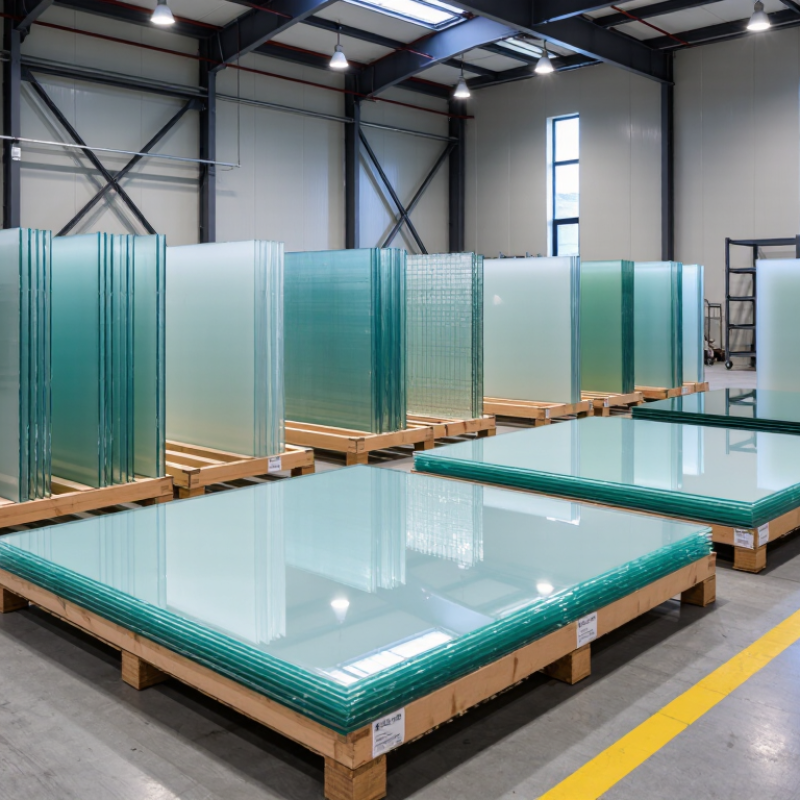
An 8x4 glass sheet usually means a nominal size of 8 feet by 4 feet. That equals 96 x 48 inches, or approximately 2438 x 1219 millimeters. It describes length and width, not glass thickness. Thickness must be specified separately, such as 4 mm, 6 mm, or 10 mm.
The actual sheet may be slightly smaller. Cutting tolerances, edge finishing, and protective packaging can reduce the usable area. I have seen buyers order frames based on the nominal size, then discover a small but costly mismatch. Glass weight also changes sharply with thickness. A standard 6 mm sheet of this size weighs roughly 43 kilograms, before packaging. Tempered, laminated, clear, low-iron, and coated glass can all use the same 8x4 format, but their handling requirements differ.
Tips: Confirm the finished dimensions, thickness, tolerance, edgework, and crate size before payment. Ask for a technical drawing or sample specification. Also check whether “8x4” means feet or another local measurement. That detail is easy to overlook. For international shipments, verify that the supplier separates net glass size from packed dimensions. A small spreadsheet helps. Still, do not trust calculations alone; confirm them against the supplier’s written specification.
For global buyers, 8x4 glass sheets usually mean 96x48 inches, or about 2440x1220 mm. Availability depends on the factory’s cutting line and shipping limits. Clear annealed float glass remains the common starting point. It suits interior partitions, furniture, and basic glazing. Tempered glass offers higher impact resistance after heat treatment. Laminated glass uses an interlayer between sheets and helps retain fragments after breakage.
Other available types include low-iron glass, tinted glass, reflective coated glass, patterned glass, and low-emissivity coated glass. Insulating glass units can also use 8x4 panes, although the final unit is not a single sheet. According to the UNEP Global Status Report for Buildings and Construction 2023, buildings and construction represented 34% of global energy demand and 37% of energy and process-related carbon emissions in 2022. That makes thermal performance more than a design choice. Low-E coatings and insulated configurations can reduce heat transfer, but performance depends on the complete window system. Do not assume a coating alone solves overheating.
Tips: Confirm thickness, edgework, coating position, and tolerance before ordering. Ask for light transmission, solar factor, and U-value data tested under ISO 9050 or EN 410 methods. A practical warning: “8x4” is not always a guaranteed stock size. Some suppliers cut from larger jumbo sheets, while others offer only selected thicknesses. Check crate dimensions too. A perfect sheet can still arrive impractical for local handling.
For global buyers, the best 8x4 glass sheet depends on the project, not the sheet size. An 8x4 sheet is only a format. It does not define strength, safety, insulation, or appearance. Start with the building’s location, glass position, loading conditions, and local safety rules. A coastal facade may need stronger wind resistance and corrosion-resistant fittings. A bathroom partition needs safety glazing and smooth, polished edges.
Choose annealed glass for basic interior glazing where impact risk is low. It is easier to cut, but it breaks into sharp pieces. Tempered glass suits doors, shower screens, partitions, and areas exposed to sudden temperature changes. It cannot be cut after heat treatment. Laminated glass is more suitable for skylights, balustrades, and overhead applications because its interlayer helps hold broken pieces together. Low-emissivity glass can reduce heat transfer, especially in large windows, but coating placement must match the insulated glass design. Patterned or frosted glass supports privacy without blocking all daylight.
Check thickness, tolerances, edge finishing, coating position, and test documentation before ordering. Ask whether the proposed glass has been tested as a complete system, including frames and seals. Packaging also matters. An 8x4 sheet can arrive with corner damage if separators or moisture control are poor. In my experience, buyers sometimes focus on price and overlook installation limits. That choice becomes expensive later. I have also seen specifications change after sampling, so confirm color, reflection, and visible distortion before mass production.
2026 Best 8x4 Glass Sheet Types for Global Buyers?
What Quality and Safety Standards Should Buyers Check?
An 8x4 sheet usually means 8 by 4 feet, but confirm the units before ordering. Check length, width, thickness, squareness, and allowable tolerance. Clear, tinted, low-iron, low-E, patterned, tempered, and laminated sheets serve different applications. The best type depends on heat, impact, visibility, and energy requirements. Do not judge quality from appearance alone. In warehouse inspections, tiny edge chips can become serious breakage points during cutting or transport.
Ask suppliers for test reports, batch records, product markings, and traceable inspection documents. Safety glass should match the destination market’s requirements. Common references include ASTM, EN, ISO, and local building codes. Tempered glass should show correct fragmentation performance after breakage testing. Laminated glass should maintain proper interlayer adhesion and resist moisture penetration. For insulated units, verify seal durability and gas retention. The documents must match the actual thickness and production batch.
Tips: Inspect sample edges under bright light. Use calipers to confirm thickness. Check optical distortion from several angles. Photograph packaging before unloading. Confirm whether certificates cover the finished product or only raw glass. Standards differ by country, and one certificate may not satisfy every project. A checklist helps, but it is not perfect. Recheck assumptions with an independent laboratory when the application is safety-critical.
| Glass Sheet Type | Typical 8×4 Sheet Specification | Main Applications | Quality Checks Before Purchase | Relevant Safety and Product Standards | Key Buyer Considerations |
|---|---|---|---|---|---|
| Clear Annealed Float Glass | 2,440 × 1,220 mm; commonly 3–12 mm thick | Frames, cabinets, partitions, mirrors, general glazing where safety glass is not required | Check thickness tolerance, flatness, visible distortion, scratches, bubbles, inclusions, edge damage and optical quality. | ASTM C1036 for flat glass; EN 572-2 for basic soda-lime silicate glass products | It is not safety glass. It can break into large sharp shards and should not be specified for doors, low-level glazing or other hazardous locations. |
| Heat-Strengthened Glass | 2,440 × 1,220 mm; commonly 4–12 mm thick | Façades, curtain walls, spandrel glazing and areas requiring improved thermal and wind-load performance | Verify heat-treatment uniformity, roller-wave distortion, bow and warp, surface quality, edge condition and design load calculations. | ASTM C1048; EN 1863-1 | It has greater resistance to thermal stress than annealed glass, but it is not generally classified as safety glazing because it may break into large pieces. |
| Fully Tempered Safety Glass | 2,440 × 1,220 mm; commonly 4–12 mm thick | Shower enclosures, doors, side panels, furniture, partitions and high-temperature or impact-exposed locations | Check fragmentation performance, surface compression where required, heat-soak testing requirements, edge quality, roller waves and hole or cut-out accuracy. | ASTM C1048; ANSI Z97.1; CPSC 16 CFR 1201; EN 12150-1; EN 12600 impact classification | All cutting, drilling, edging and notching must be completed before tempering. After breakage, it should disintegrate into small granular fragments rather than large sharp pieces. |
| Heat-Soak-Tested Tempered Glass | 2,440 × 1,220 mm; commonly 6–12 mm thick | Overhead glazing, façades, canopies, balustrades and projects with strict spontaneous-breakage risk controls | Request documented heat-soak cycle records, batch traceability, fragmentation results, visual inspection reports and confirmation of permitted breakage limits. | EN 14179-1; EN 12150-1; project specifications may also require ASTM C1048 compliance | Heat-soak testing can reduce, but cannot completely eliminate, the risk associated with nickel sulfide inclusions. It may increase yield loss and cost. |
| Laminated Safety Glass | 2,440 × 1,220 mm; common constructions include 4.38 mm, 6.38 mm and 8.38 mm | Balustrades, skylights, overhead glazing, façades, vehicle-adjacent areas, sound-control glazing and security applications | Check interlayer type and thickness, adhesion, boil or humidity resistance, edge seal quality, bubbles, delamination, optical distortion and visible defects. | ASTM C1172; EN 14449; EN ISO 12543; EN 12600 or ANSI Z97.1 where impact classification is required | The interlayer is designed to retain fragments after breakage. For overhead or guard applications, verify the complete system design, support conditions and local code requirements. |
| Low-E Coated Glass | 2,440 × 1,220 mm; commonly 4–6 mm monolithic or used in laminated/insulating assemblies | Energy-efficient windows, façades, curtain walls and solar-control glazing | Confirm visible light transmittance, solar factor or SHGC, U-value assumptions, emissivity, coating position, color uniformity, scratch resistance and edge deletion requirements. | ASTM C1376 for pyrolytic and sputter-coated glass; EN 1096 for coated glass; whole-window performance may require EN 410 and EN 673 calculations | Performance values depend on glass thickness, cavity, gas fill, spacer and frame. Always evaluate the complete glazing unit rather than the coating alone. |
| Insulating Glass Unit | Overall size may be 2,440 × 1,220 mm; typical build-ups include 4–16–4 mm or 6–12–6 mm | Residential windows, commercial façades, curtain walls and thermal-acoustic glazing systems | Check air or gas leakage, dew-point performance, seal integrity, spacer alignment, cavity width, gas concentration, desiccant condition and visual cleanliness. | ASTM E2190; EN 1279 series; EN 673 for thermal transmittance calculation | Confirm whether the unit uses air, argon or another gas, and verify compatibility between sealants, coatings, spacers and frame materials. Size limits depend on fabrication equipment and structural design. |
| Frosted or Acid-Etched Safety Glass | 2,440 × 1,220 mm; commonly 4–10 mm thick, often supplied as tempered or laminated glass | Privacy partitions, bathroom enclosures, doors, interior screens and decorative architectural glazing | Check uniformity of translucency, coating or etched-surface consistency, stain resistance, fingerprint visibility, edge finish and safety-glass fragmentation or retention performance. | Safety substrate may be evaluated under EN 12150-1, EN 14449, EN 12600, ANSI Z97.1 or CPSC 16 CFR 1201, depending on construction and market | Confirm whether the surface is etched, ceramic-printed or film-treated. Tempering after treatment may not be possible for every process, so fabrication sequence must be agreed in advance. |
Choosing the best 8x4 glass sheet depends on more than thickness and appearance. Common options include clear, tempered, laminated, low-iron, and coated glass. Global buyers should compare light transmission, edge quality, flatness, tolerances, and intended use. A sample inspection is valuable. Photos can hide small chips.
Supplier evaluation needs evidence, not promises. Request recent test reports, production records, packing photos, and references from comparable export projects. Check whether the supplier can maintain stable thickness across repeated orders. Ask how defects are recorded and replaced. A low price may conceal inconsistent quality. That mistake can become expensive after installation.
Tips: Compare quotations using the same specifications and delivery terms. Confirm whether prices include cutting, crating, export documents, insurance, and port charges. For shipping, review crate strength, moisture protection, container loading, and maximum stack height. Sea freight is usually economical, but transit time can affect project schedules. Air freight is faster, yet rarely practical for large sheets. Ask for the estimated arrival date, not only the sailing date. Also clarify responsibility for breakage under the selected Incoterm. I would leave a small time buffer; schedules often look cleaner on paper than at the port. Recheck every detail before payment.
It usually measures 96 by 48 inches, or about 2440 by 1220 millimeters. Availability varies by cutting equipment and shipping limits.
Common options include clear annealed, tempered, laminated, low-iron, tinted, reflective, patterned, and low-emissivity glass. Stock varies.
No. The format does not define strength, safety, insulation, or appearance. Match the glass to location, loading, and local safety requirements.
Tempered glass suits doors, shower screens, partitions, and areas facing sudden temperature changes. It offers higher impact resistance. It cannot be cut afterward.
Laminated glass suits skylights, balustrades, and overhead applications. Its interlayer helps retain fragments after breakage. Still, the complete design needs review.
It can reduce heat transfer, especially in large windows. Performance depends on coating position, frames, seals, and the complete window system. A coating alone may not prevent overheating.
Confirm thickness, tolerances, edgework, coating position, light transmission, solar factor, and U-value data. Request testing under recognized methods, such as ISO 9050 or EN 410.
Poor separators or moisture control can cause corner damage during transport. Check crate dimensions before shipping. A perfect sheet may still be difficult to handle locally.
Some buyers focus heavily on price and overlook installation limits. Specifications may change after sampling. Confirm color, reflection, and visible distortion before mass production. That choice can become expensive.
Choosing the right 8x4 Glass Sheet is an important step for construction, interior design, furniture, and commercial glazing projects. The term generally refers to a sheet measuring approximately 8 feet by 4 feet, although actual dimensions may vary by market and manufacturer. Buyers can select from clear, tinted, frosted, laminated, tempered, low-iron, coated, and insulated glass options, depending on the required balance of light transmission, privacy, strength, energy efficiency, and appearance.
Before ordering, match the glass type and thickness to the project’s structural, thermal, acoustic, and safety requirements. Check dimensional accuracy, surface quality, edge finishing, packaging, and compliance with recognized safety and quality standards. Global buyers should also compare supplier experience, production capacity, customization services, inspection procedures, payment terms, and after-sales support. Shipping plans should account for crate protection, handling equipment, insurance, port requirements, lead times, and import documentation to ensure the 8x4 Glass Sheet arrives safely and efficiently.

Jiaerbe Glass